
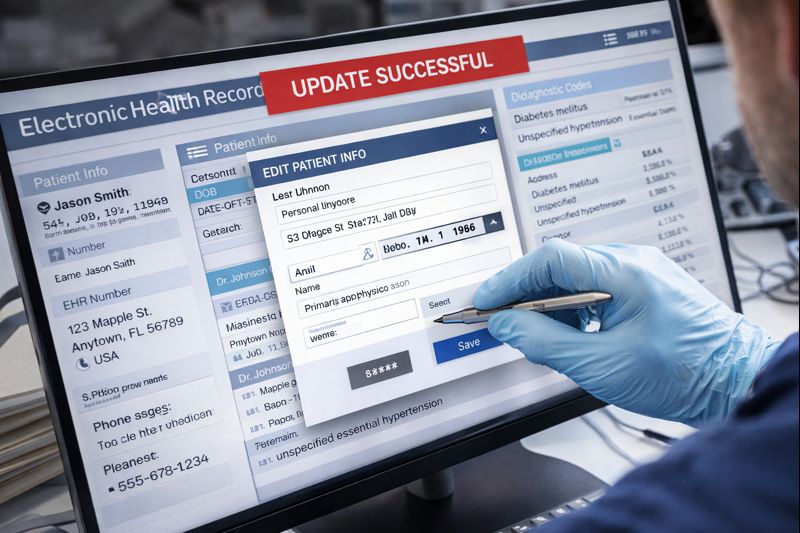
After a serious nursing home injury, the chart often becomes the battleground. Families may see a clean narrative on paper, while the timeline on the ground feels off.
Electronic health records (EHRs) can help close that gap because many systems keep an audit trail, a behind-the-scenes log that timestamps user activity and record changes. Federal EHR certification criteria include audit logging of actions like creating, changing, or deleting health information.
In this post, we break down what audit trails show, how “late entries” can raise real questions, and what practical steps matter early in a Georgia nursing home case.
EHR Audit Trails and Chart Metadata
An EHR audit trail records who accessed a chart, what they did, and when they did it. “Metadata” means the time-and-user data attached to documentation events, such as timestamps, authorship, and edit history.
A “late entry” describes documentation added after the fact. Late entries can occur for legitimate reasons, but timing matters.
Medicare guidance expects amendments or delayed entries to clearly identify the change, show the date and author, and preserve the original content rather than erase it. When a record shows heavy editing after an incident, missing originals, or sudden backfilled notes, the audit trail can help a case get past surface-level explanations.
Evidence Preservation and Georgia Spoliation Rules
Facilities must maintain resident medical records that are complete and accurately documented under federal nursing facility regulations. When a facility alters or fails to preserve key EHR data, the dispute can move into spoliation territory (loss or destruction of evidence).
Georgia courts recognize that a duty to preserve evidence can arise when litigation becomes reasonably foreseeable to the party controlling the evidence. In practice, that is why timing matters. Early action can help protect the underlying data, including audit logs, user access histories, and prior versions of notes.
Practical Steps for Families After an Injury
If you suspect a cover-up, focus on documentation basics:
- Request records promptly and keep a log of what you receive.
- Ask whether the facility uses an EHR and whether it can produce audit logs tied to the resident’s chart.
- Write down dates, symptoms, names, and communications while details stay fresh.
- Seek help quickly so counsel can send preservation demands and target the right electronic data.
The Williams Litigation Group handles Georgia nursing home abuse and neglect cases, including matters involving injuries, falls, and bedsores. To speak with our team, call 1-866-214-7036 or fill out our contact form.