
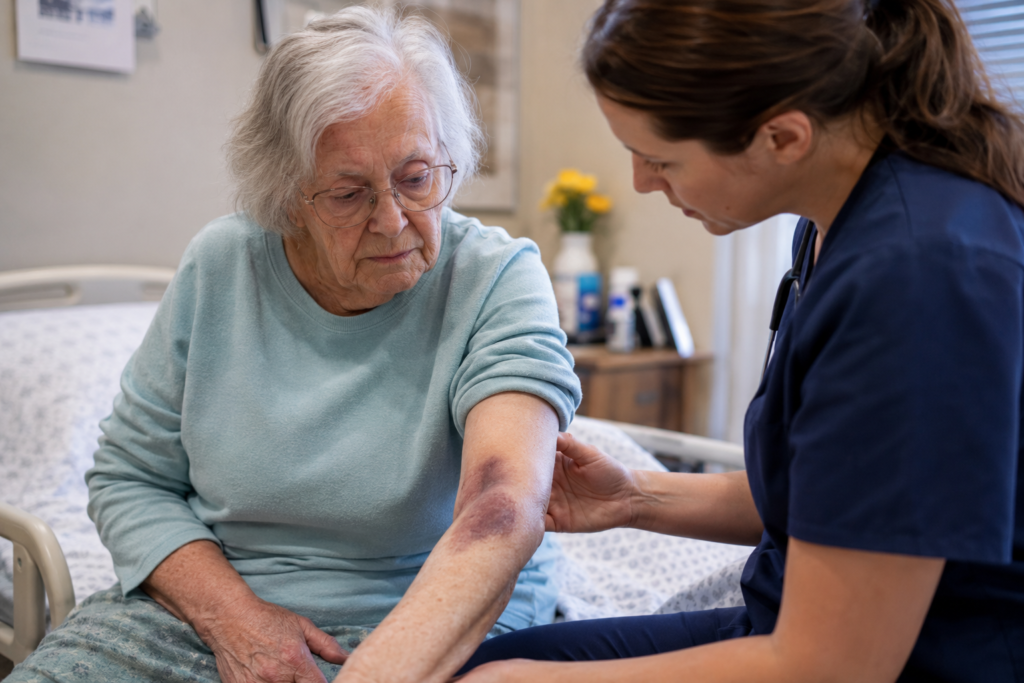
Aging can make a person more fragile. Skin bruises faster. Balance may change. A resident may need more help with meals, bathing, medication, or walking. Still, “they are just getting older” should not end the conversation when a loved one gets hurt in a nursing home.
In Georgia, families can ask what happened, who noticed the change, and what the facility did next. Some injuries may connect to a resident’s health. Others may point to poor supervision, rushed care, or a care plan that staff did not follow.
Nursing Home Injuries and Aging
Not every injury proves neglect. Older adults may fall, lose weight, develop confusion, or get infections for reasons tied to illness or declining mobility.
Federal rules require facilities to provide care that helps each resident maintain their highest practical physical, mental, and emotional well-being. That includes assessing risks, following care plans, and responding when a resident’s condition changes.
So, when staff blame age alone, families should look at the details:
- Did anyone update the care plan after a fall?
- Did staff track weight loss?
- Did they report a bruise right away?
- Did the resident wait too long for medical attention?
Warning Signs of Nursing Home Neglect
Neglect can show up as one serious incident, but it often builds slowly. That could be a missed meal here, a delayed bathroom trip there, or a fall that “nobody saw.” Over time, those gaps can become dangerous.
Families should pay attention to repeated falls, unexplained bruises, pressure ulcers, dehydration, sudden weight loss, poor hygiene, medication errors, or infections that seem to get worse before anyone acts.
The explanation also matters. If staff give different versions of the same event, avoid direct answers, or dismiss concerns without records, that can raise another red flag.
Georgia’s long-term care resident rights protect residents’ dignity, care, communication, and access to certain information. Families do not have to accept vague answers when a loved one’s health changes.
Protect Your Loved One’s Rights
Start by asking direct questions:
- When did staff first notice the injury?
- Who documented it? Did the facility call a doctor?
- Did anyone change the care plan afterward?
Save photos, hospital discharge papers, text messages, emails, and names of staff members you spoke with.
If the answers still feel incomplete, we can help you look closer. Contact The Williams Litigation Group at 1-866-214-7036 or online to request a consultation.