
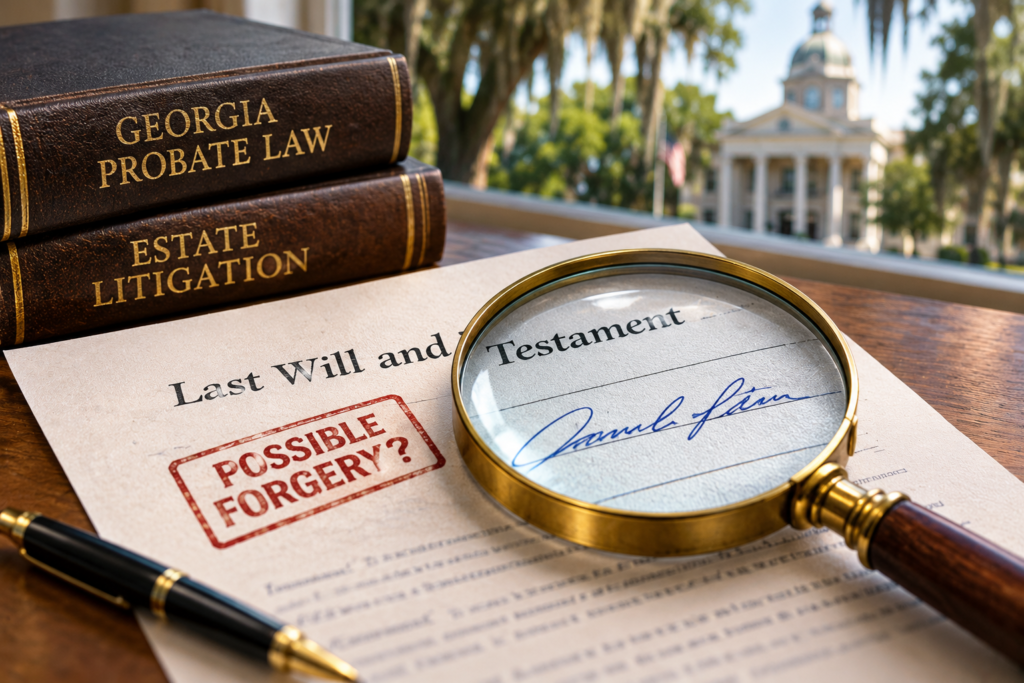
After a loved one passes away, family members generally expect their will to reflect their final wishes. But what happens when a will suddenly appears with an unfamiliar signature, unexpected changes, or provisions that seem completely out of character?
For families in Brunswick and throughout Glynn County, discovering a potentially forged will can create serious concerns about how an estate will be distributed. Georgia law allows interested parties to challenge a will when there is evidence that it was forged or improperly altered.
Understanding the warning signs and the legal process can help families protect their inheritance rights.
What Are the Warning Signs of a Forged Will?
A forged will may involve someone signing another person’s name, altering an existing document, or creating a document that falsely appears to represent the deceased person’s wishes.
Some circumstances that may raise questions about a will’s authenticity include:
- A signature that looks noticeably different from the deceased person’s usual handwriting
- A newly discovered will that makes unexpected changes to beneficiaries
- Witnesses who cannot confirm how or when the document was signed
- Changes to a will that appear to have been made after it was executed
- A will that appears inconsistent with other estate planning documents
These warning signs do not necessarily prove forgery. A person may legitimately change their estate plan, even when family members disagree with those decisions.
However, unusual circumstances surrounding the creation or discovery of a will may justify a closer examination.
How Can You Prove That a Will Was Forged?
Challenging a will based on forgery generally requires more than showing that its provisions are surprising or unfair.
Evidence may include handwriting samples, testimony from witnesses, communications involving the deceased person, and records showing when the document was created.
For example, a Brunswick family may discover a will that leaves the family home to one sibling, even though an earlier document divided the estate equally among several children.
If the signature on the newer will appears questionable, an attorney may investigate whether it matches verified signatures from other documents.
A forensic document examiner may also be able to evaluate handwriting, signatures, or physical alterations to the document.
The strength of a forgery claim depends on the available evidence and the circumstances surrounding the will’s execution.
How Do You Contest a Will in Glynn County Probate Court?
In Georgia, an interested party may challenge a will through a legal objection known as a caveat.
When a will is offered for probate in solemn form, heirs and other interested parties who receive notice generally have an opportunity to raise objections before the court determines whether to admit the will.
For estates handled in Brunswick, these disputes may begin in the Glynn County Probate Court.
A caveat based on suspected forgery may challenge whether the deceased person actually signed the document or whether the will was properly executed under Georgia law.
The court may consider witness testimony, the original will, handwriting evidence, and other relevant information.
If the court determines that the document is invalid, it may refuse to admit the will to probate.
What Happens if the Court Finds That a Will Was Forged?
When a will is rejected because of forgery, the estate does not automatically pass to the person who challenged it.
Instead, the court may consider whether an earlier valid will exists.
If there is no valid will governing the estate, Georgia’s intestacy laws may determine how the deceased person’s property is distributed.
This can significantly affect who inherits a family home, bank accounts, investments, or other assets.
A forged will may also raise separate concerns about financial misconduct or other wrongdoing, depending on the circumstances.
Why Is It Important to Act Quickly?
Waiting too long to challenge a suspicious will can make an already difficult situation more complicated.
Georgia law treats wills admitted to probate in common form differently from those admitted in solemn form. A solemn-form probate judgment can become binding on interested parties, making the timing of an objection particularly important.
Delays may also make it harder to locate witnesses, preserve documents, or prevent disputed estate assets from being distributed.
Family members who suspect a will was forged should consider obtaining copies of the relevant documents and seeking legal guidance before the probate process moves forward.
Contact The Williams Litigation Group
Disputes involving a potentially forged will can place considerable strain on families, especially when valuable property or longstanding family relationships are involved.
If you believe a loved one’s will was forged, altered, or improperly submitted for probate, The Williams Litigation Group can help evaluate the circumstances and determine whether there are grounds to challenge the document.
Our firm represents clients in estate litigation matters in Brunswick, Glynn County, and throughout Georgia. Contact us at 1-866-214-7036 or through our online contact form to discuss your situation.