
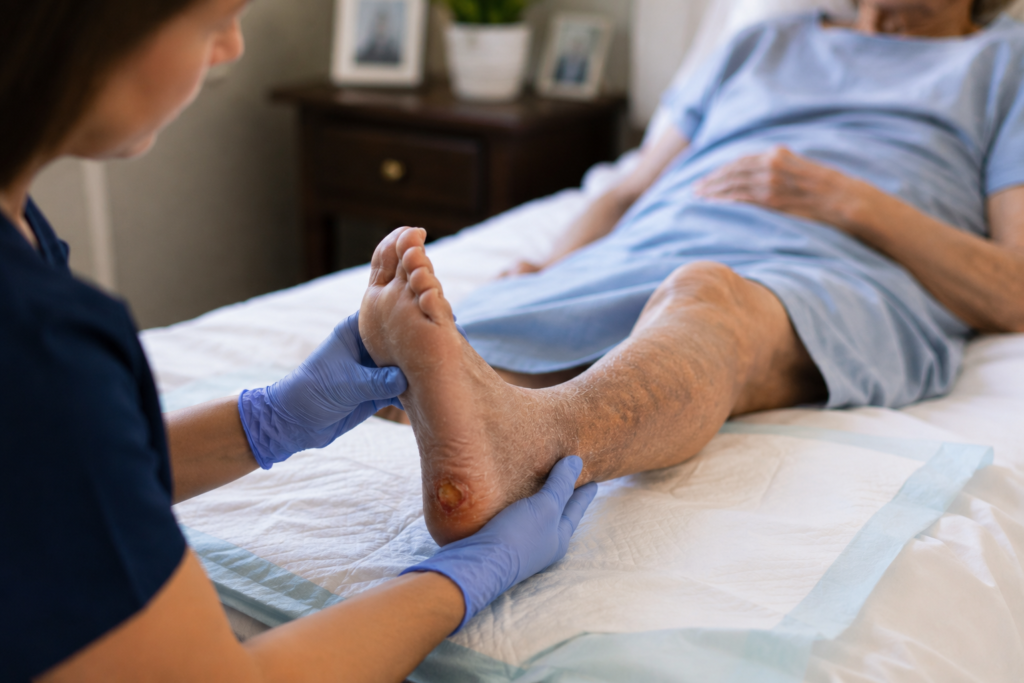
Pressure ulcers, also called bedsores, form when steady pressure cuts down blood flow to the skin. They often show up near the tailbone, hips, heels, ankles, or elbows. In a Georgia nursing home, one wound may raise questions. A wound that gets worse, spreads, or keeps coming back may suggest something more serious: a breakdown in daily care.
Pressure Ulcers in Nursing Homes
A pressure ulcer does not prove neglect by itself. Some residents have limited mobility, fragile skin, poor circulation, or other medical problems that make wounds harder to prevent. Even so, nursing homes cannot ignore that risk.
Federal nursing home rules require facilities to assess each resident and provide care that helps prevent avoidable pressure ulcers. If a resident already has one, the facility must provide treatment that supports healing, reduces infection risk, and helps prevent more ulcers from forming.
That sounds clinical, but it often comes down to basic care:
- Did staff reposition the resident?
- Did they keep the skin clean and dry?
- Did they notice early redness?
- Did they follow the care plan?
Signs of Systemic Neglect
Systemic neglect usually shows up as a pattern, not a single mistake. A resident may miss several turning checks, sit in soiled bedding, wait too long for wound care, or receive shifting explanations from staff. When complaints go nowhere and records leave obvious gaps, families may have reason to look closer.
Georgia’s Long-Term Care Facilities Residents’ Bill of Rights gives residents important protections, including rights tied to dignity, care, communication, and access to certain information. Those rights matter when families only learn about a serious wound after it has already worsened.
Pressure ulcers can also reveal staffing problems. If several care steps fall through, the wound may become evidence of a larger failure in supervision, training, or facility routines.
Records That May Matter
Families should save what they can. Photos of the wound, hospital discharge papers, wound-care notes, text messages, emails, and names of staff members can help show how the problem developed.
Medical records may also tell a fuller story. Care plans, skin assessments, nutrition notes, infection records, and staffing logs can show whether the nursing home responded to the resident’s needs or let the problem grow.
Speak With the Williams Litigation Group
If your loved one developed pressure ulcers in a Georgia nursing home, we can review the facts and help you understand whether neglect may have played a role. Contact The Williams Litigation Group by calling 1-866-214-7036 or filling out the contact form to request a consultation.